Political polling has become an essential part of democratic societies, providing insights into public opinion, voter behavior, and political trends. In Nigeria, where elections often attract global attention, political polls are increasingly significant for politicians, parties, media houses, and citizens. Platforms like OpinionHub.ng offer an effective way for Nigerians to express opinions, gauge sentiment, and participate in the political conversation through online polling.
This article examines political polling in Nigeria, exploring the methods used, the accuracy of polls, emerging trends, and how platforms like OpinionHub.ng are shaping public opinion.
The Role of Political Polling in Nigeria
Political polling serves several important purposes in Nigeria:
Understanding Voter Preferences: Polls provide insight into which candidates or parties are favored by the electorate.
Informing Campaign Strategies: Politicians use polling data to identify strengths, weaknesses, and key voter demographics.
Predicting Election Outcomes: Well-conducted polls can indicate likely election results and voter turnout.
Enhancing Public Engagement: Polls encourage citizens to express opinions on governance, policies, and electoral issues.
Media Reporting: Poll results are often used by journalists to inform citizens and provide context for political debates.
With Nigeria’s diverse population and multi-party system, political polling helps create a snapshot of the nation’s political mood at any given time.
Methods of Political Polling in Nigeria
Several methods are used for political polling in Nigeria, each with advantages and limitations:
1. Face-to-Face Surveys
Traditionally, political polling involved in-person interviews. Researchers visit households or public spaces to ask respondents questions about voting intentions, candidate preferences, and political views.
Pros:
Personal interaction can improve data accuracy.
Respondents are more likely to answer complex questions with guidance.
Cons:
Time-consuming and costly.
Limited reach, particularly in rural or insecure areas.
2. Telephone Surveys
Telephone polls involve calling randomly selected respondents to gather opinions. This method allows faster data collection compared to face-to-face interviews.
Pros:
Faster and cheaper than in-person surveys.
Can reach a wide geographical area.
Cons:
Some Nigerians may not answer calls from unknown numbers.
Limited to respondents with access to a phone.
3. Online Polling
With internet penetration increasing in Nigeria, online polls have become a popular method. Platforms like OpinionHub.ng allow citizens to participate via smartphones, computers, or tablets.
Pros:
Instant data collection and real-time results.
Cost-effective and scalable.
Can target specific demographics or interest groups.
Cons:
Not all Nigerians have reliable internet access.
Self-selection bias may occur if participation is voluntary.
4. Mixed-Mode Polling
Some organizations use a combination of face-to-face, telephone, and online polling to balance coverage, accuracy, and cost.
Pros:
Broader reach and demographic representation.
Combines the strengths of each method while minimizing weaknesses.
Cons:
More complex to administer and analyze.
Accuracy of Political Polls in Nigeria
Accuracy is a key concern for political polls. Several factors influence how accurately polls reflect voter intentions:
1. Sample Size and Representation
The size and diversity of the sample are crucial. Polls that only focus on urban areas or specific socio-economic groups may not reflect the broader population. Ideally, a representative sample mirrors Nigeria’s demographics, including age, gender, religion, region, and socio-economic status.
2. Question Design
Poll questions must be clear, neutral, and unbiased. Leading or confusing questions can distort results. For example, asking “Do you support the corrupt politicians in the country?” is biased and may produce unreliable data.
3. Timing of Polls
Polling too far from an election or after significant events can affect accuracy. Voter opinions may shift due to political debates, scandals, or policy announcements.
4. Nonresponse and Bias
Some Nigerians may refuse to participate or may not provide honest answers, particularly in politically sensitive contexts. Nonresponse bias occurs when certain groups are underrepresented in the poll.
5. Technology and Fraud Prevention
Online polls must ensure secure voting mechanisms to prevent multiple submissions, manipulation, or cyber attacks. OpinionHub.ng provides secure, user-friendly platforms that reduce the risk of inaccurate data due to manipulation.
Emerging Trends in Political Polling in Nigeria
Political polling in Nigeria is evolving, influenced by technology, media, and societal changes. Some key trends include:
1. Growth of Online Polling
Internet penetration and mobile device usage have expanded online political polling. Nigerians are increasingly expressing opinions through platforms like OpinionHub.ng, social media polls, and website surveys.
2. Real-Time Public Sentiment Analysis
Modern platforms allow real-time tracking of voter sentiment. Political analysts, journalists, and campaign teams can respond quickly to emerging trends, making political engagement more dynamic.
3. Data-Driven Campaigns
Political parties and candidates now rely on polling data to develop targeted campaigns. Understanding voter preferences helps in customizing messaging, choosing campaign locations, and addressing voter concerns.
4. Youth Participation
Nigeria’s youth population is highly active online, creating a demographic that online polls can easily reach. Engaging young voters through digital polls is becoming central to political strategy.
5. Integration with Social Media
Polls shared on platforms like WhatsApp, Facebook, X, and Instagram amplify reach and generate discussion. Viral polls not only provide data but also drive public engagement and debate.
Challenges Facing Political Polling in Nigeria
Despite technological advances, political polling faces several challenges:
Digital Divide: Rural areas may have limited internet access, affecting online poll representation.
Trust Issues: Some Nigerians are skeptical of poll accuracy due to past controversies and perceived biases.
Election Security Concerns: Online political activity is sometimes subject to scrutiny by regulators and authorities.
Media Influence: Media reporting can affect poll outcomes by framing questions or highlighting certain trends.
Overcoming these challenges requires transparency, representative sampling, and secure platforms like OpinionHub.ng.
Best Practices for Conducting Political Polls
To ensure accuracy and reliability, political polls in Nigeria should follow best practices:
Use representative samples that reflect Nigeria’s diverse population.
Craft unbiased, clear, and neutral questions.
Choose appropriate polling methods based on the target audience.
Ensure secure systems to prevent manipulation and multiple submissions.
Report methodology, sample size, and timing to maintain credibility.
Promote polls widely to encourage participation from various demographics.
OpinionHub.ng adheres to these best practices, making it a reliable platform for political polling in Nigeria.
The Impact of Political Polls on Nigerian Democracy
Political polls influence democratic processes by providing insights into public opinion. They empower citizens to express preferences, inform policy discussions, and hold leaders accountable.
Well-conducted polls also improve transparency and trust in electoral processes. They provide media outlets with factual data, reducing reliance on speculation or rumor. In a country with complex political dynamics, opinion polls help stabilize discourse by offering measurable insights into voter sentiment.
OpinionHub.ng: Transforming Political Polling in Nigeria
OpinionHub.ng has become a leading platform for political polling in Nigeria. Its features include:
User-friendly design: Easy access for voters across all digital literacy levels.
Mobile optimization: Polling via smartphones, crucial for Nigerian online behavior.
Secure voting: Reduces the risk of manipulation and ensures data integrity.
Analytics tools: Real-time insights into voter sentiment and trends.
Engagement features: Polls can be shared on social media, increasing reach and discussion.
By providing a reliable and accessible platform, OpinionHub.ng enables Nigerians to participate in political polling confidently and meaningfully.
Looking Ahead: The Future of Political Polling in Nigeria
The future of political polling in Nigeria is promising. Key developments include:
Expansion of digital participation: More Nigerians will engage in online polls as internet access grows.
AI and big data analysis: Advanced algorithms will provide deeper insights into voter behavior and trends.
Greater youth influence: Young Nigerians, who are highly active online, will play an increasing role in shaping election outcomes.
Increased transparency: Secure online platforms will improve public trust in poll results.
Integration with policy-making: Policymakers may use poll results to guide decisions and improve governance.
OpinionHub.ng is well-positioned to lead this evolution, providing reliable, accessible, and secure polling solutions for Nigeria’s political landscape.
Conclusion
Political polling is a vital aspect of Nigeria’s democratic process, offering insights into voter preferences, public opinion, and political trends. With the rise of digital platforms, online polling has become more accessible, cost-effective, and dynamic.
OpinionHub.ng provides a secure, user-friendly, and reliable platform for conducting political polls in Nigeria. By leveraging these tools, political parties, media houses, researchers, and citizens can engage in data-driven decision-making, improve public discourse, and strengthen democratic practices.
As Nigeria continues to embrace digital solutions, political polling will play a central role in shaping elections, campaigns, and civic engagement. Platforms like OpinionHub.ng ensure that every Nigerian has a voice in the conversation, making political polling an essential component of the country’s democratic future.
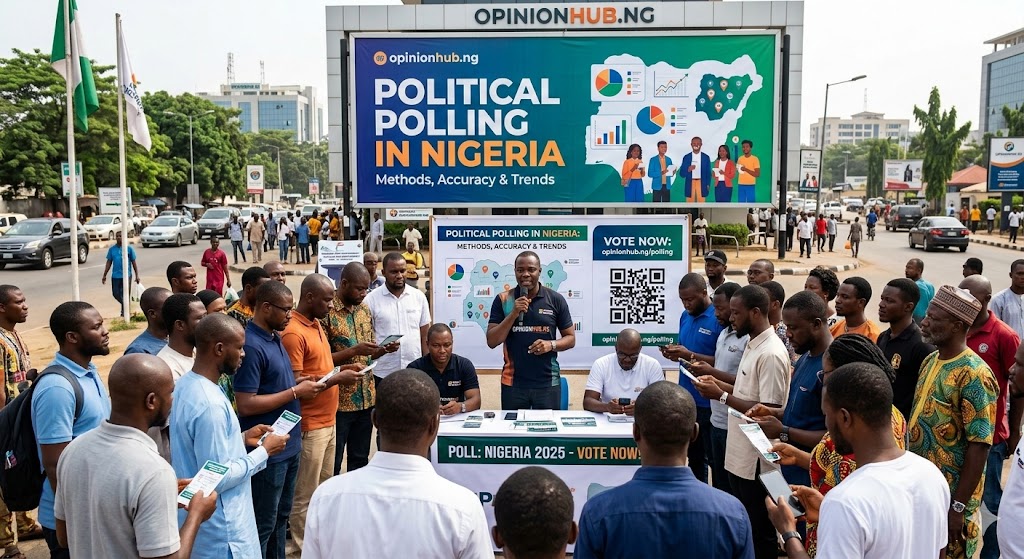
Political Polling in Nigeria: Methods, Accuracy & Trends
General
General
Ojo-Olayinka Foluwasomi
March 02, 2026
7 min read
0 Shares
Latest Polls

Latest Datasets
No datasets available yet.
Related Posts in General
Free survey tool for Nigerian businesses
In today’s competitive Nigerian market, data is no longer optional — it is e...
Ojo-Olayinka Foluwasomi
Mar 02, 2026
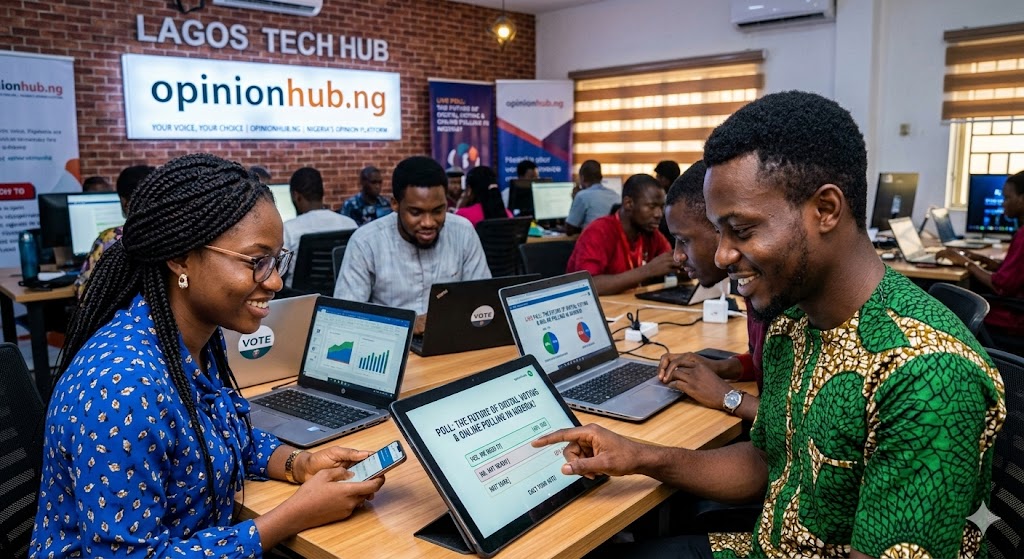
The Future of Digital Voting & Online Polling in Nigeria
The rise of digital technology has transformed the way people interact, share op...
Ojo-Olayinka Foluwasomi
Mar 02, 2026

How Businesses Can Use Opinion Polls to Grow in Nigeria.
In today’s digital era, businesses in Nigeria face an increasingly competitive...
Ojo-Olayinka Foluwasomi
Mar 02, 2026

How to Create Viral Polls That Nigerians Love to Vote On
Creating viral polls that Nigerians love to vote on is both an art and a science...
Ojo-Olayinka Foluwasomi
Mar 02, 2026

Ultimate Guide to Conducting Online Polls in Nigeria
Online polls have become one of the most powerful tools for gathering public opi...
Ojo-Olayinka Foluwasomi
Mar 02, 2026
Comments (0)
No comments yet. Be the first to comment!