The rise of digital technology has transformed the way people interact, share opinions, and participate in decision-making processes. In Nigeria, where a youthful and digitally connected population continues to grow, the future of digital voting and online polling holds enormous potential. Platforms like OpinionHub.ng are at the forefront, offering Nigerians the opportunity to participate in structured, secure, and real-time online polls.
Digital voting and online polling are not just technological innovations—they are catalysts for civic engagement, business intelligence, and social discourse. From political elections to market research, online polls are shaping how decisions are made and opinions are measured in Nigeria.
This article explores the future of digital voting and online polling in Nigeria, the benefits of these systems, challenges to adoption, and how platforms like OpinionHub.ng are shaping the landscape.
Understanding Digital Voting and Online Polling
Digital voting refers to the use of electronic systems to cast votes in elections, referenda, or surveys. Online polling, on the other hand, allows participants to express opinions, preferences, or feedback through web-based platforms. Both systems rely on secure technology to collect, store, and analyze data efficiently.
In Nigeria, online polling has become increasingly popular for gauging public opinion on topics such as politics, governance, social issues, business preferences, entertainment, and lifestyle trends. Unlike informal social media discussions, structured online polls provide measurable and reliable data that can be used by individuals, businesses, researchers, and policymakers.
Why Digital Voting and Online Polling Are Important
Nigeria is a nation with over 200 million people, a high level of mobile penetration, and an increasingly active internet population. Digital voting and online polling offer several advantages:
Convenience: Citizens can vote or participate in polls from the comfort of their homes or via mobile devices.
Real-time results: Online systems provide instant feedback and analytics for faster decision-making.
Wider reach: Online polls can engage diverse populations across regions, socio-economic classes, and demographics.
Cost-effective: Digital systems reduce the need for physical materials, staff, and logistics compared to traditional polling methods.
Transparency: Structured online polls enhance credibility by providing quantifiable and verifiable results.
Platforms like OpinionHub.ng allow Nigerians to experience these benefits while participating in polls that shape public discourse.
The Growing Demand for Digital Voting
As Nigeria modernizes, demand for digital voting is increasing. Citizens are looking for efficient, secure, and reliable ways to express their opinions, whether for political elections, organizational decisions, or community initiatives.
Several factors contribute to this trend:
Youthful population: Nigeria has one of the youngest populations in the world, with a high affinity for mobile and digital technology.
Social media engagement: Nigerians actively discuss politics, policies, and social issues online, creating a culture of opinion sharing.
Need for accountability: Citizens want transparent systems that provide confidence in outcomes and data integrity.
Business intelligence: Companies use online polls to understand consumer preferences and adapt products or services accordingly.
OpinionHub.ng capitalizes on this trend, offering a platform for secure and engaging online polling for both public and private use.
Applications of Digital Voting and Online Polling in Nigeria
Digital voting and online polling have multiple applications across sectors:
1. Political Engagement
Online polls allow citizens to voice opinions on governance, policy proposals, and electoral preferences. Poll results can inform political parties, policymakers, and civil society organizations about public sentiment.
2. Business Insights
Businesses can use online polls to understand consumer behavior, product preferences, and market trends. This enables companies to make data-driven decisions, develop effective marketing strategies, and enhance customer satisfaction.
3. Social Research
Researchers, NGOs, and advocacy groups can leverage online polling to study social issues, gather demographic insights, and analyze trends over time.
4. Education and Institutions
Schools and universities can conduct online polls to gather feedback on teaching quality, campus facilities, or student initiatives, enhancing institutional decision-making.
5. Entertainment and Lifestyle
Polls on trending topics, celebrity news, music, movies, and sports generate engagement, measure popularity, and inform content creation strategies.
Benefits of Online Polling Platforms Like OpinionHub.ng
OpinionHub.ng offers specific advantages that make it ideal for digital voting and polling in Nigeria:
User-friendly interface: Easy for Nigerians of all digital literacy levels to participate.
Mobile optimization: Most Nigerians access the internet via mobile devices, and the platform caters to this trend.
Real-time analytics: Businesses, researchers, and organizers can track participation, demographic trends, and voting patterns instantly.
Secure and credible: Ensures data integrity and reduces the risk of manipulation.
Wide accessibility: Enables engagement across Nigeria’s diverse regions, including urban and semi-urban areas.
By providing these features, OpinionHub.ng helps create a reliable and engaging digital polling experience for Nigerians.
Challenges to Digital Voting and Online Polling
Despite the advantages, digital voting and online polling face challenges in Nigeria:
Digital literacy: While mobile penetration is high, not all citizens are proficient in using online platforms.
Internet connectivity: In rural areas, limited or unstable internet access can restrict participation.
Trust and security: Some Nigerians remain skeptical about the integrity of online systems, fearing data breaches or manipulation.
Regulatory concerns: Legal frameworks for digital voting are still evolving, particularly in the context of political elections.
Platforms like OpinionHub.ng address many of these challenges by providing secure, accessible, and transparent polling mechanisms.
Future Trends in Digital Voting and Online Polling in Nigeria
The future of digital voting and online polling in Nigeria is promising, with several key trends emerging:
1. Integration with Mobile Technology
As smartphone adoption continues to rise, mobile-optimized polling platforms will dominate. Apps and mobile-friendly websites will ensure broader participation and engagement.
2. Blockchain and Secure Voting Systems
Blockchain technology offers tamper-proof voting and polling systems. In the future, Nigerian digital voting may leverage blockchain to enhance transparency, security, and trust.
3. AI-Driven Insights
Artificial intelligence can analyze large datasets from polls to predict trends, segment demographics, and provide actionable insights for businesses and policymakers.
4. Real-Time Public Feedback for Governance
Government agencies may increasingly use online polls to gauge public sentiment on policies, reforms, and service delivery, enabling more responsive governance.
5. Increased Civic Participation
Digital voting and polling will empower citizens, especially youth, to participate in decision-making processes, strengthening democracy and accountability in Nigeria.
How Businesses and Organizations Can Leverage Digital Polling
Businesses, NGOs, and institutions can harness digital polling to drive growth, engagement, and social impact:
Market research: Test new products, pricing, and services before launching.
Customer engagement: Involve customers in decisions to increase loyalty and satisfaction.
Event feedback: Collect real-time opinions on conferences, webinars, or campaigns.
Policy evaluation: For NGOs and advocacy groups, understand public sentiment on social issues.
OpinionHub.ng provides tools to design customized polls, track results, and analyze data, making it easy to incorporate online polling into strategic planning.
Case Example: Using Online Polls to Gauge Public Sentiment
Consider a scenario where a Nigerian fintech startup wants to introduce a new payment feature. Using OpinionHub.ng, they create a poll to assess user interest, preferred payment methods, and willingness to adopt the feature.
Poll results indicate strong interest among urban millennials but lower adoption likelihood among rural users. The startup uses this insight to tailor marketing strategies, improve product usability, and target early adopters effectively.
This example illustrates how online polling can reduce risks, optimize product launches, and improve customer satisfaction.
Promoting Online Polls in Nigeria
For digital voting and polling to be effective, promotion is critical. Strategies include:
Social media campaigns: Leverage Facebook, X, Instagram, and WhatsApp for maximum reach.
Email marketing: Engage existing audiences with personalized poll invitations.
Partnerships with influencers: Amplify visibility and credibility.
Integration with websites and blogs: Capture votes from site visitors directly.
OpinionHub.ng provides tools to create shareable links, embed polls, and track engagement across platforms, ensuring maximum participation.
The Role of OpinionHub.ng in Shaping the Future
OpinionHub.ng is helping to define Nigeria’s digital voting and polling landscape by providing a secure, user-friendly, and widely accessible platform. Its impact is evident across political discourse, business strategy, social research, and entertainment.
By enabling structured engagement, real-time analytics, and broad accessibility, OpinionHub.ng is positioning Nigeria as a digitally empowered nation where citizens can actively participate in shaping public opinion.
Conclusion
The future of digital voting and online polling in Nigeria is bright. With increasing internet penetration, mobile device usage, and social media engagement, digital platforms like OpinionHub.ng are transforming how Nigerians express opinions, make decisions, and interact with businesses and governance.
Businesses, policymakers, researchers, and advocacy groups can all benefit from leveraging online polls to capture actionable insights, engage audiences, and promote transparency. As technology evolves, platforms like OpinionHub.ng will continue to play a pivotal role in shaping public discourse and decision-making in Nigeria.
Digital voting and polling are no longer optional—they are essential tools for civic participation, business growth, and societal development. Nigerians are ready to embrace this future, and OpinionHub.ng provides the ideal platform to make it happen.
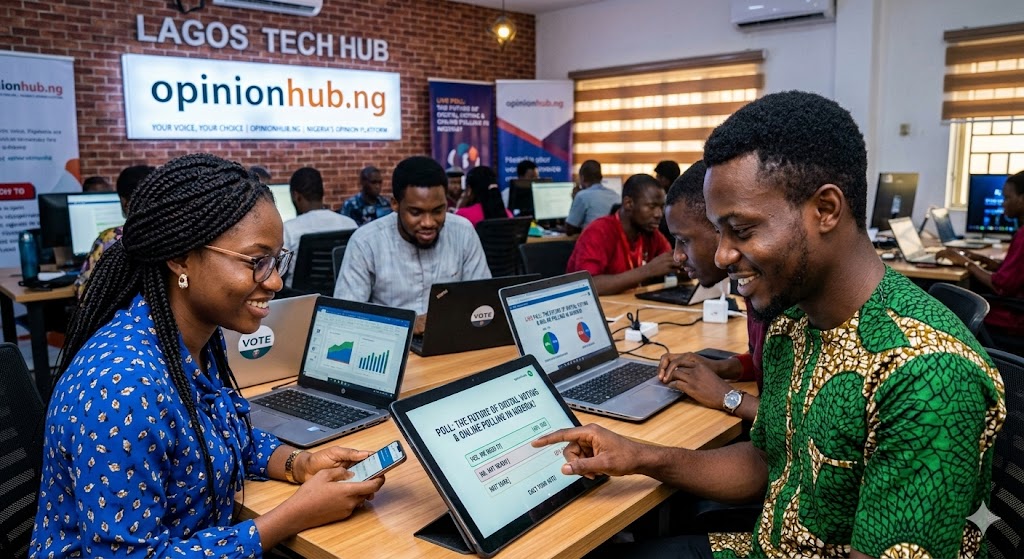
The Future of Digital Voting & Online Polling in Nigeria
General
General
Ojo-Olayinka Foluwasomi
March 02, 2026
8 min read
0 Shares
Latest Polls

Latest Datasets
No datasets available yet.
Related Posts in General
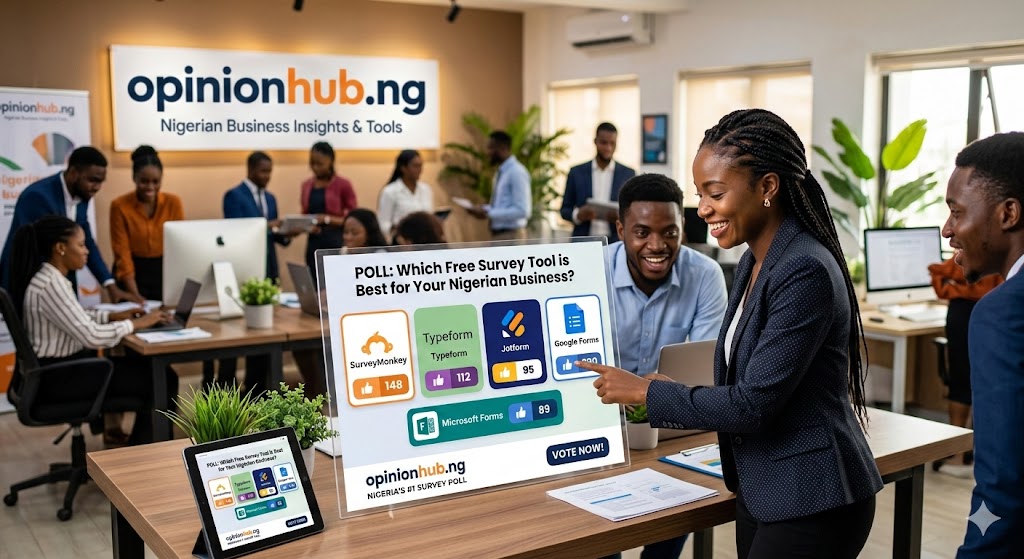
Free survey tool for Nigerian businesses
In today’s competitive Nigerian market, data is no longer optional — it is e...
Ojo-Olayinka Foluwasomi
Mar 02, 2026

Political Polling in Nigeria: Methods, Accuracy & Trends
Political polling has become an essential part of democratic societies, providin...
Ojo-Olayinka Foluwasomi
Mar 02, 2026

How Businesses Can Use Opinion Polls to Grow in Nigeria.
In today’s digital era, businesses in Nigeria face an increasingly competitive...
Ojo-Olayinka Foluwasomi
Mar 02, 2026

How to Create Viral Polls That Nigerians Love to Vote On
Creating viral polls that Nigerians love to vote on is both an art and a science...
Ojo-Olayinka Foluwasomi
Mar 02, 2026

Ultimate Guide to Conducting Online Polls in Nigeria
Online polls have become one of the most powerful tools for gathering public opi...
Ojo-Olayinka Foluwasomi
Mar 02, 2026
Comments (0)
No comments yet. Be the first to comment!