In today’s rapidly evolving Nigerian business environment, relying on assumptions rather than evidence is increasingly risky. Consumer preferences change quickly, competition is intense across almost every sector, and digital platforms have amplified the voices of customers like never before.
For Nigerian businesses seeking sustainable growth, the ability to listen, understand, and respond to their market is no longer optional. Online polls have emerged as a powerful tool that allows businesses to do exactly that.
Nigeria’s growing digital population makes online polling especially relevant. With tens of millions of Nigerians actively using smartphones, social media, and online platforms, people are already expressing opinions daily about products, services, prices, and brands.
Online polls provide a structured way to capture these opinions and convert them into measurable insights. Instead of guessing what customers want or relying on internal assumptions, businesses can ask direct questions and receive clear feedback that supports smarter decision-making.
Cost is another major reason Nigerian businesses should embrace online polls. Traditional market research methods such as physical surveys and focus groups often require significant financial and logistical resources. Online polls eliminate many of these barriers by allowing data to be collected digitally, analyzed automatically, and delivered almost instantly.
This makes them accessible not only to large corporations but also to small and medium-sized enterprises that may not have the budget for extensive research projects. By lowering the cost of insight gathering, online polls level the playing field across the business ecosystem.
Speed is a critical advantage in Nigeria’s highly competitive market. Trends in retail, fintech, entertainment, telecommunications, and consumer goods can shift within weeks or even days. Online polls enable businesses to test ideas, validate assumptions, and measure customer sentiment in real time.
Decisions that once took weeks to finalize can now be made within hours, giving businesses the agility required to stay ahead of competitors and respond quickly to market changes.
Product and service development also benefit significantly from online polling. Many businesses struggle because they invest heavily in offerings that do not fully align with customer needs. Online polls help bridge this gap by allowing customers to influence product features, service improvements, and overall user experience.
When businesses incorporate customer feedback early in the development process, they reduce the risk of failure and increase the likelihood of market acceptance. The result is stronger product-market fit and higher customer satisfaction.
Beyond research, online polls strengthen customer engagement and brand trust. When customers are invited to share their opinions, they feel valued and heard. This sense of inclusion fosters loyalty and encourages repeat interactions with the brand.
Businesses that actively listen to their audience are often perceived as more transparent, responsive, and customer-focused. Over time, this builds credibility and can transform satisfied customers into vocal brand advocates, particularly on social media platforms.
Nigeria’s diversity further highlights the importance of online polls. Consumer behavior varies widely across regions, age groups, income levels, and cultural backgrounds. What resonates with customers in Lagos may not appeal to those in Enugu, Kano, or Uyo.
Online polling allows businesses to segment responses and gain insights specific to different demographics and locations. This enables more targeted marketing, better pricing strategies, and messaging that feels relevant rather than generic.
Marketing and advertising efforts become more effective when guided by real audience feedback. Online polls help businesses understand how their brand is perceived, which messages resonate most, and which channels drive awareness.
By testing concepts before launching full campaigns, companies can avoid costly mistakes and allocate their marketing budgets more efficiently. In a market where advertising costs continue to rise, this data-driven approach significantly improves return on investment.
Online polls also provide valuable competitive intelligence. They help businesses understand why customers choose certain brands over others and what factors influence switching behavior. These insights allows companies to refine their value proposition and identify gaps in the market. Rather than reacting blindly to competition, businesses can position themselves strategically based on real consumer perspectives.
Beyond commercial applications, online polls play an important role in public engagement, corporate social responsibility, and policy-related initiatives. Government agencies, NGOs, and socially responsible businesses can use polls to measure public opinion, assess community needs, and evaluate the impact of programs. For businesses involved in social projects or advocacy, polling data provides credible evidence to support planning and reporting.
At the core of all these benefits is better decision-making. Businesses that rely on data rather than intuition are more likely to allocate resources effectively, manage risks, and achieve long-term growth. Online polls transform opinions into insights and insights into strategy. In an economy as dynamic and competitive as Nigeria’s, this ability to make informed decisions is a powerful advantage.
As digital adoption continues to expand across the country, online polls will only become more valuable. Nigerian businesses that embrace this tool position themselves to understand their customers more deeply, adapt more quickly, and compete more effectively. In a market where listening can determine success or failure, online polls offer a simple yet powerful way to stay connected to what truly matters—the voice of the customer.

Why Nigerian Businesses Should Use Online Polls
General
General
Ikechukwu Anaekwe
February 09, 2026
5 min read
0 Shares
Latest Polls

Latest Datasets
No datasets available yet.
Related Posts in General
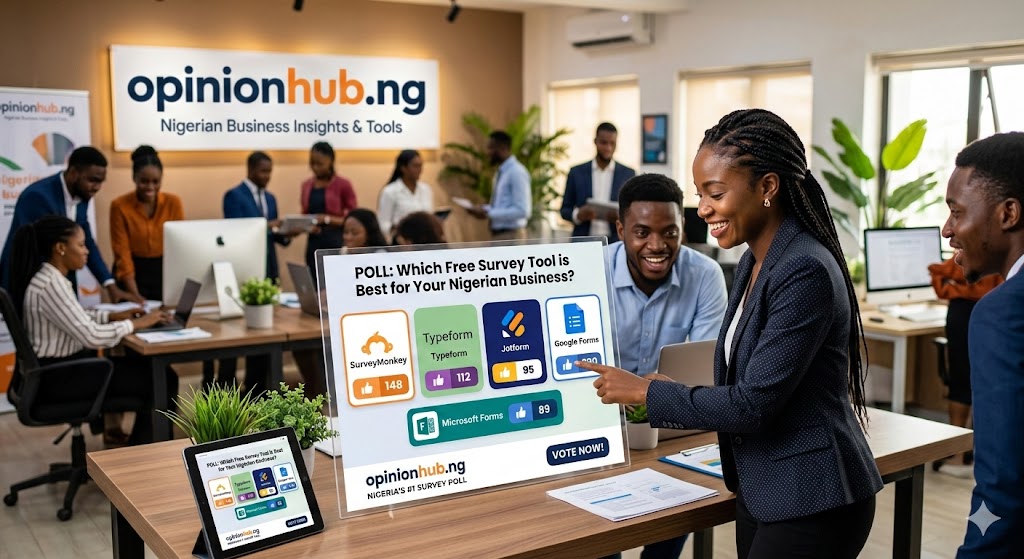
Free survey tool for Nigerian businesses
In today’s competitive Nigerian market, data is no longer optional — it is e...
Ojo-Olayinka Foluwasomi
Mar 02, 2026

Political Polling in Nigeria: Methods, Accuracy & Trends
Political polling has become an essential part of democratic societies, providin...
Ojo-Olayinka Foluwasomi
Mar 02, 2026

The Future of Digital Voting & Online Polling in Nigeria
The rise of digital technology has transformed the way people interact, share op...
Ojo-Olayinka Foluwasomi
Mar 02, 2026

How Businesses Can Use Opinion Polls to Grow in Nigeria.
In today’s digital era, businesses in Nigeria face an increasingly competitive...
Ojo-Olayinka Foluwasomi
Mar 02, 2026

How to Create Viral Polls That Nigerians Love to Vote On
Creating viral polls that Nigerians love to vote on is both an art and a science...
Ojo-Olayinka Foluwasomi
Mar 02, 2026


Comments (0)
No comments yet. Be the first to comment!