Online polls have become a popular feature across Nigerian media platforms, blogs, and social networks. From political preferences and policy debates to social issues and entertainment trends, polls offer a quick way to gauge public opinion. With just a click, thousands of Nigerians can express their views, and the results often spread rapidly across the internet. But an important question remains: how reliable are online polls in Nigeria?
While online polls can be useful for engagement and conversation, their reliability depends on several critical factors. Understanding these factors is essential for readers, journalists, policymakers, and businesses that rely on digital data to shape opinions or decisions.
Nigeria’s digital space is growing rapidly, but it is still uneven. Internet access in the country is concentrated largely in urban areas and among younger, more educated populations. This reality immediately raises questions about representativeness. When an online poll asks Nigerians what they think about fuel subsidy removal, elections, or economic reforms, it is often capturing the views of those who are online, not the views of the entire country.
This digital divide affects reliability because large segments of the population, particularly rural dwellers, older citizens, and lower-income groups, are underrepresented or completely excluded. As a result, online polls in Nigeria tend to reflect the opinions of a digitally active minority rather than a nationally balanced audience. This does not make the results useless, but it does mean they should not be interpreted as a true national consensus.
Another major issue affecting reliability is self-selection. Most online polls rely on voluntary participation. People who feel strongly about an issue are more likely to vote, while those who are indifferent or undecided often ignore the poll. In Nigeria, where political, ethnic, and religious issues can generate strong emotions, this self-selection bias can significantly skew results.
For example, an online poll about a political candidate shared within a partisan WhatsApp group or on a politically aligned website is likely to attract voters who already support a particular viewpoint. The results may appear overwhelming, but they often reflect the audience of the platform rather than the broader Nigerian public. In such cases, the poll measures enthusiasm within a group, not overall public opinion.
Platform bias also plays a significant role. Online polls hosted on news websites, blogs, or social media platforms tend to mirror the demographics and ideological leanings of their audience. A poll conducted on a youth-focused platform may produce very different results from one hosted on a business-oriented or religious website.
In Nigeria’s highly segmented media environment, this makes it difficult to generalize poll outcomes beyond the platform where they were conducted.
The lack of scientific sampling further reduces the reliability of many online polls. Traditional opinion polling relies on carefully designed samples that reflect population characteristics such as age, gender, region, and socioeconomic status. Most online polls in Nigeria do not use such methods. Instead, they allow anyone who encounters the poll to vote, often without controls to ensure balance or prevent repeat voting.
In some cases, a single individual can vote multiple times using different devices or browsers, especially when basic security measures are not in place. This opens the door to manipulation, whether intentional or accidental. Coordinated voting campaigns, social media mobilization, and even bots can distort results, particularly on high-profile or controversial issues.
Timing also affects reliability. Online polls often capture opinions at a specific moment, sometimes during emotionally charged events such as protests, court rulings, or breaking news. In Nigeria, where public sentiment can shift quickly in response to political developments or economic announcements, poll results may reflect temporary emotions rather than stable opinions. Without context, these results can be misleading.
Despite these limitations, it would be wrong to dismiss online polls entirely. Their strength lies in speed, accessibility, and engagement. Online polls are excellent tools for sparking debate, encouraging participation, and identifying emerging trends, especially among digitally active Nigerians. They can highlight what people are talking about and how opinions are shifting within specific online communities.
For platforms like OpinionHub.ng, online polls serve an important purpose in amplifying voices and stimulating conversation. When clearly presented as informal opinion snapshots rather than scientific measurements, they add value to public discourse. Problems arise only when poll results are presented as definitive evidence of national opinion without acknowledging their limitations.
The reliability of online polls in Nigeria improves when certain best practices are followed. Transparency about who can participate, how votes are counted, and what the poll represents helps readers interpret results correctly. Contextualizing poll outcomes within broader social, economic, or political realities also reduces the risk of misinterpretation. Most importantly, online polls should complement, not replace, rigorous surveys and market research.
In political reporting, especially during elections, overreliance on online polls can be dangerous. Nigeria’s electoral history shows that online enthusiasm does not always translate into real-world outcomes. Voter turnout, regional dynamics, and offline mobilization often tell a very different story from what appears on social media or websites. Treating online polls as predictive tools rather than engagement tools can lead to false expectations and credibility issues.
In conclusion, online polls in Nigeria are partially reliable but highly limited. They are reliable for understanding the opinions of connected, engaged, and motivated internet users. They are unreliable when used to represent the entire Nigerian population or to predict complex outcomes such as election results or nationwide policy support.
The real value of online polls lies not in precision, but in participation. When used responsibly, they enrich conversations, surface viewpoints, and encourage civic engagement. When misused or overstated, they risk distorting reality and weakening trust in data-driven discussions. For readers and publishers alike, the key is not to ask whether online polls are good or bad, but to ask what they truly measure—and what they do not.

How Reliable Are Online Polls in Nigeria?
General
General
Ikechukwu Anaekwe
February 07, 2026
5 min read
0 Shares
Latest Polls

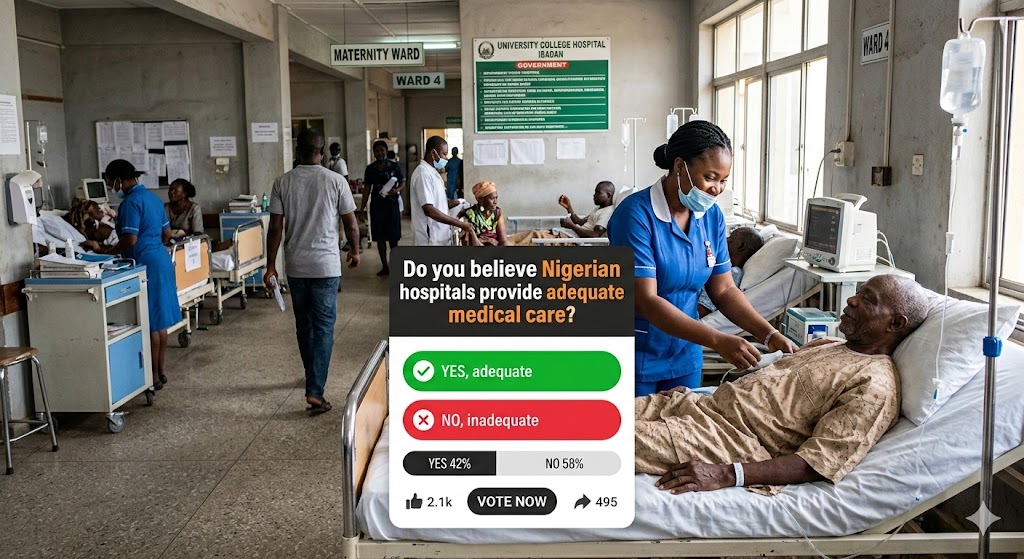
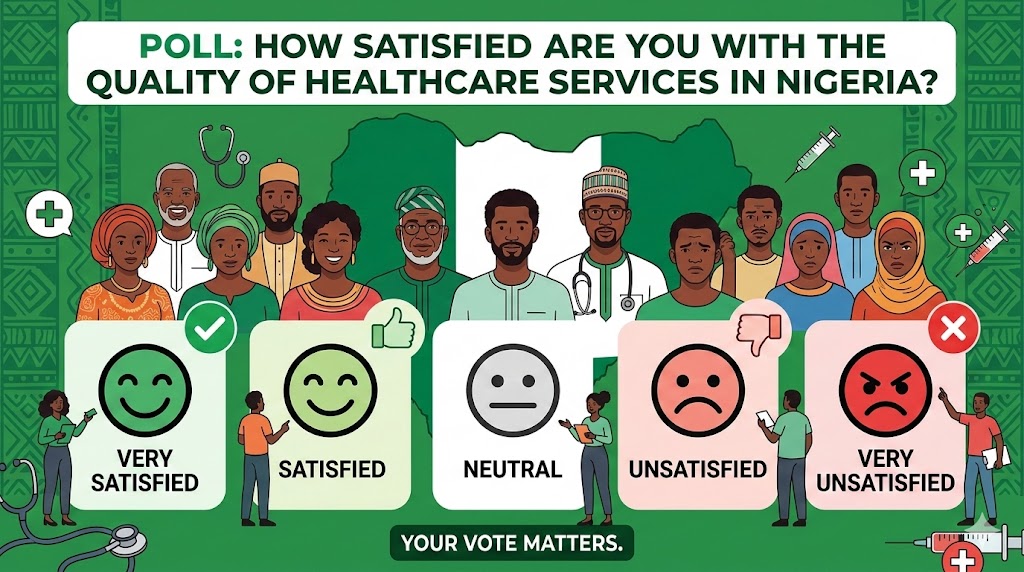
Latest Datasets
No datasets available yet.
Related Posts in General
Free survey tool for Nigerian businesses
In today’s competitive Nigerian market, data is no longer optional — it is e...
Ojo-Olayinka Foluwasomi
Mar 02, 2026
Political Polling in Nigeria: Methods, Accuracy & Trends
Political polling has become an essential part of democratic societies, providin...
Ojo-Olayinka Foluwasomi
Mar 02, 2026
The Future of Digital Voting & Online Polling in Nigeria
The rise of digital technology has transformed the way people interact, share op...
Ojo-Olayinka Foluwasomi
Mar 02, 2026

How Businesses Can Use Opinion Polls to Grow in Nigeria.
In today’s digital era, businesses in Nigeria face an increasingly competitive...
Ojo-Olayinka Foluwasomi
Mar 02, 2026

How to Create Viral Polls That Nigerians Love to Vote On
Creating viral polls that Nigerians love to vote on is both an art and a science...
Ojo-Olayinka Foluwasomi
Mar 02, 2026


Comments (0)
No comments yet. Be the first to comment!